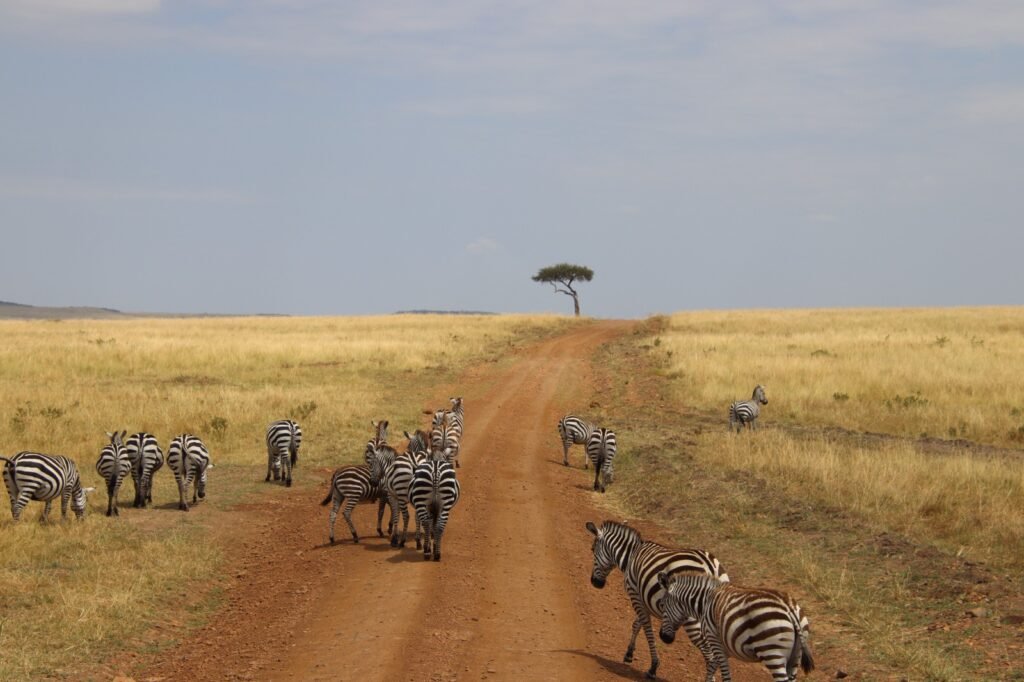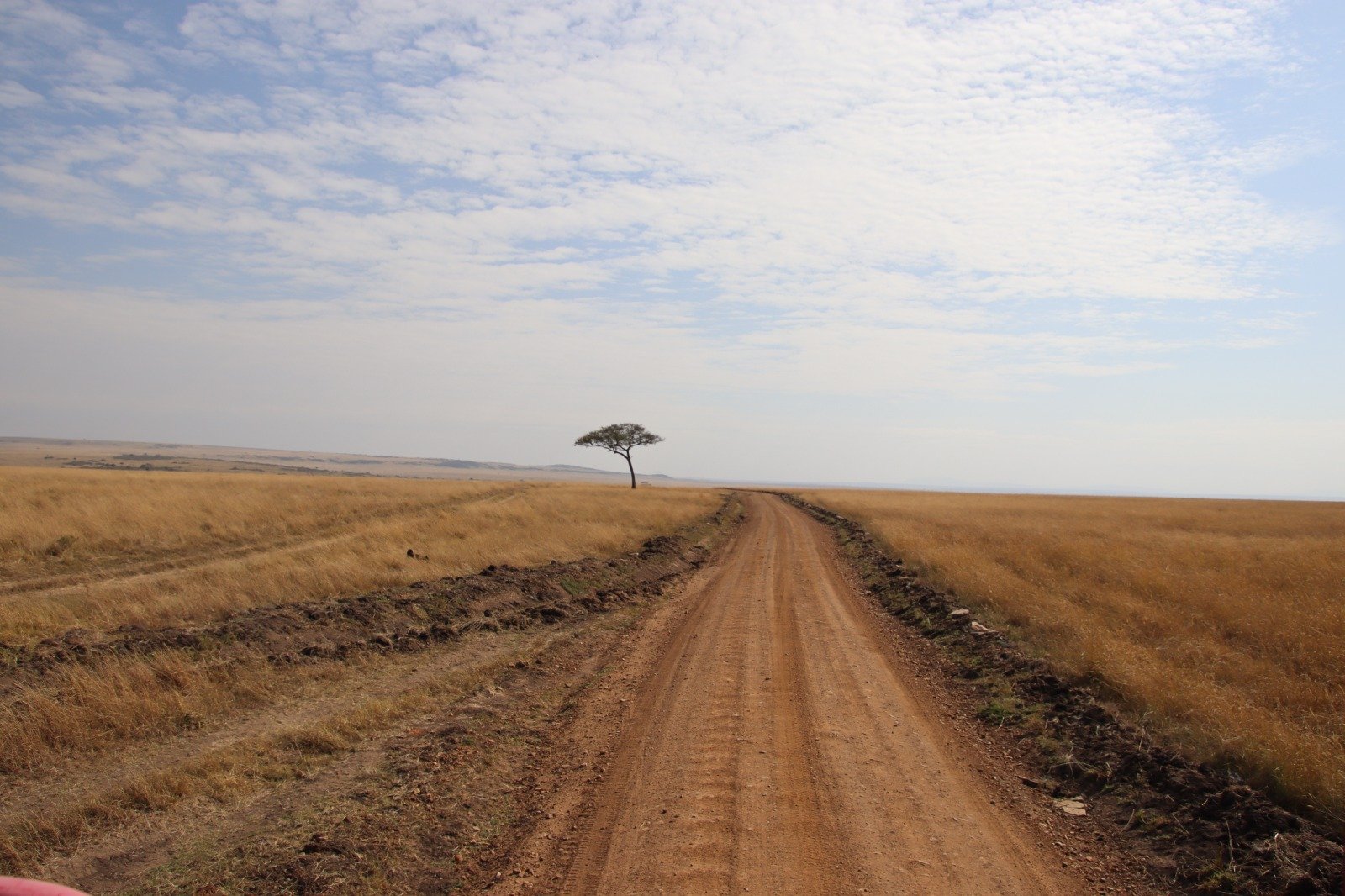
The Masai Mara is rarely just one colour; it is a living canvas that shifts with the rays of the sun and the unpredictable arrival of the rains. The Mara transitions from those scattered emerald bushes—where the greenery is so thick it feels heavy—to the scorched, golden-brown grasslands where the predators rest in plain sight. It’s about the earthy ochre of the tracks and the way the dust turns to a fine copper mist behind a moving herd. Everything here is a study in mixed hues of gold, green, ochre and blue.
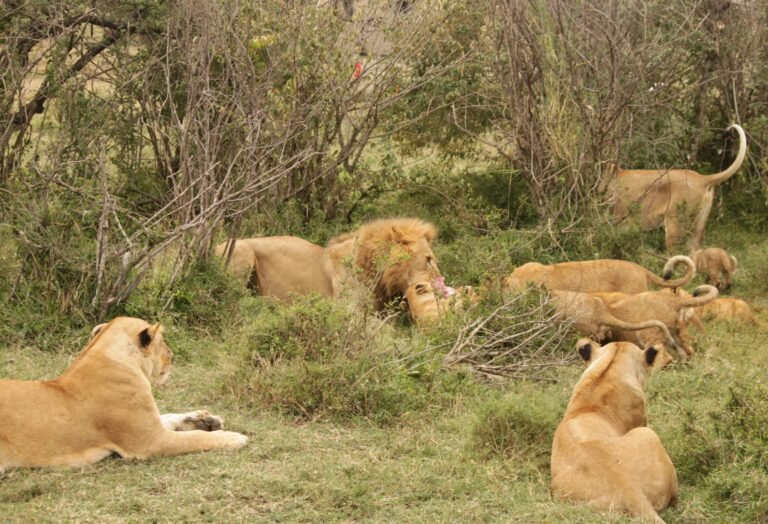
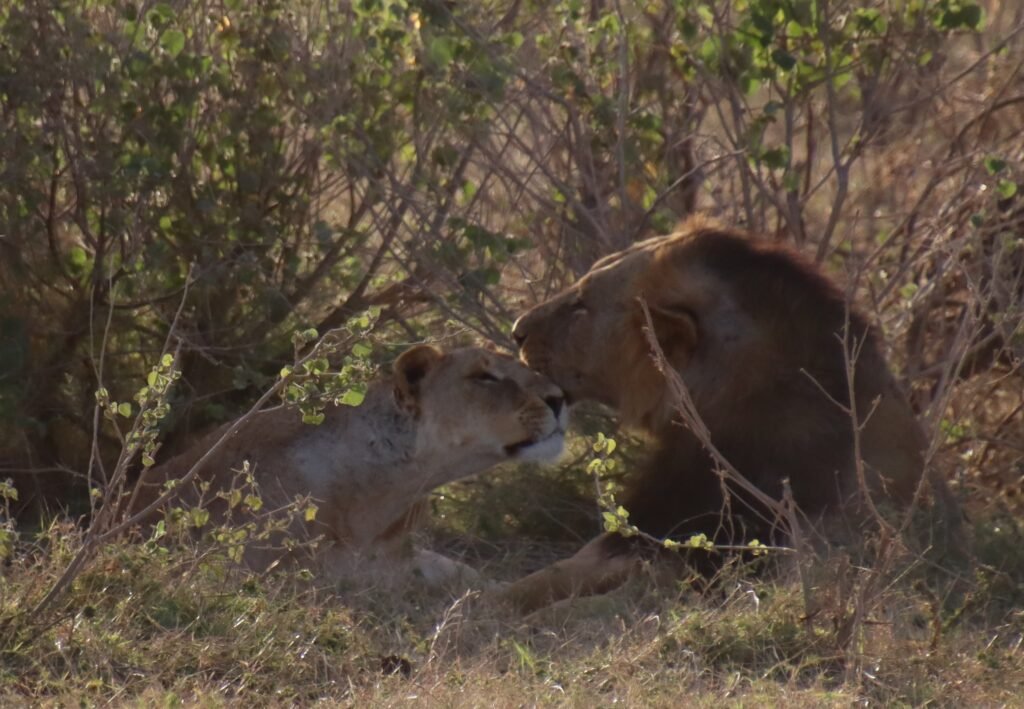
Your first visit to the Masai Mara would leave you speechless not just from wildlife viewing, but from the sheer scale of the landscape around you. The range of the palette stays in the mind. The big cats, make for the heroes of the story of this land you would think, the true masters of this magnificent landscape. A pride of lions doesn’t just sit in the grass; they own the grass. Their coats are a perfect match for the desiccated, tawny stalks of the savanna in the dry season. You could be staring right at a lioness, and until she blinks or a black-tipped ear twitches, she is merely a ripple in the golden heat. It’s a bit of a game they play with your eyes—a golden predator in a golden world.
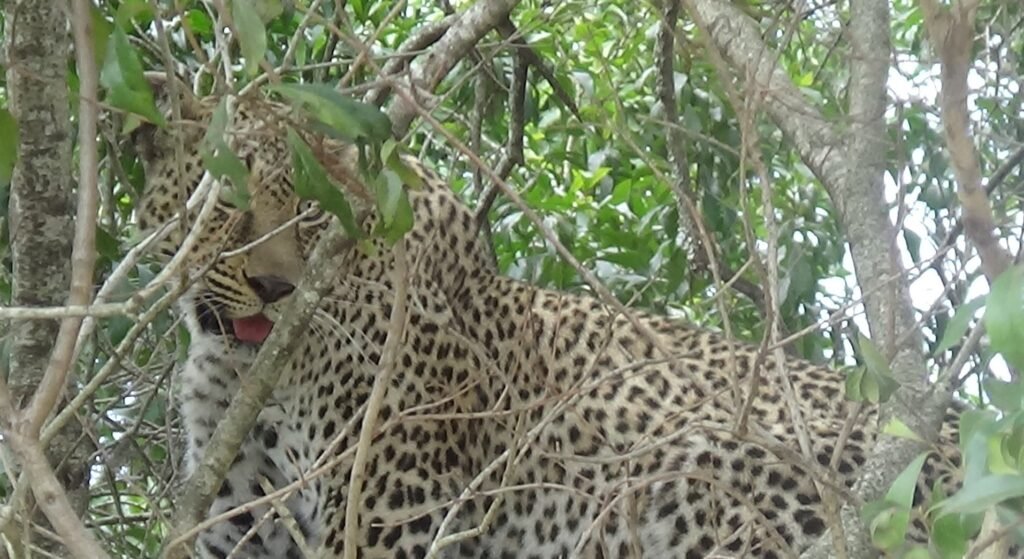
If you ever talk about sheer beauty in the Mara, you must be referring to the magnificent Leopard, whose spots are not just patterns but a clever trick of light and shadow. When perched high up in the branches of an ancient tree with a prey, it plays out such a pretty picture of light through greens, that all one can spot are those unforgettable eyes, peeking out of the foliage, reflecting the dappled sunlight filtering through the leaves. It is quite startling how such a powerful creature can simply vanish into the bark and the greenery.
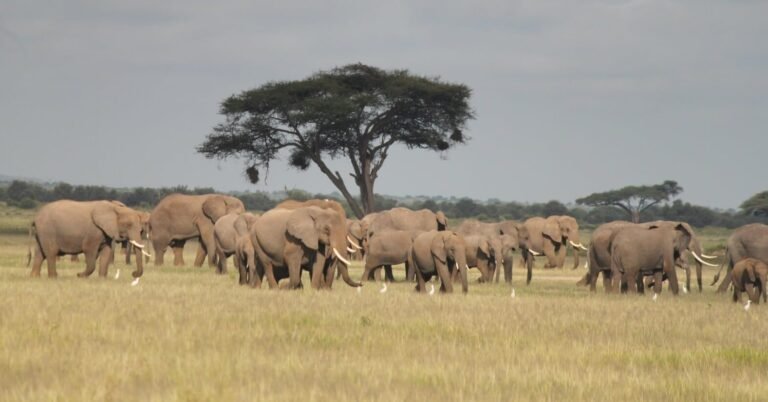
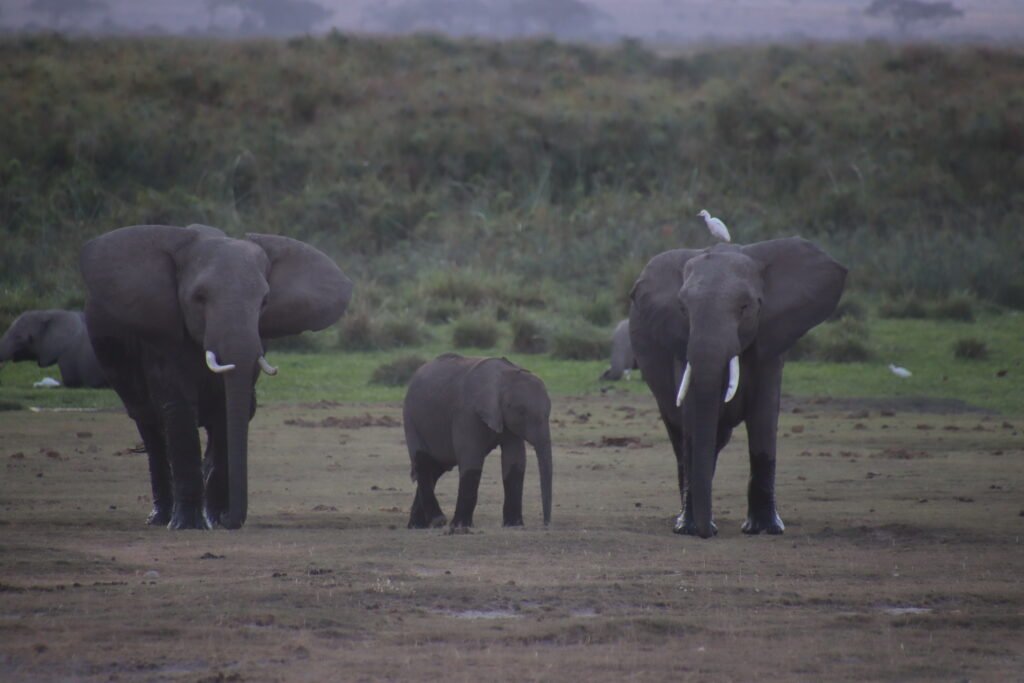
Speaking about being the owners of the land, the indisputable contenders for this title are the gentle giants, the elephants. They might be the dusty red of the earth or a deep, wet slate-grey after a mud bath. Watching a matriarch lead her family across a ridge at sunset is a moment of pure magic; their massive silhouettes turn to ink against a sky that is rapidly changing from pale turquoise to a bruised purple and finally a fiery orange.
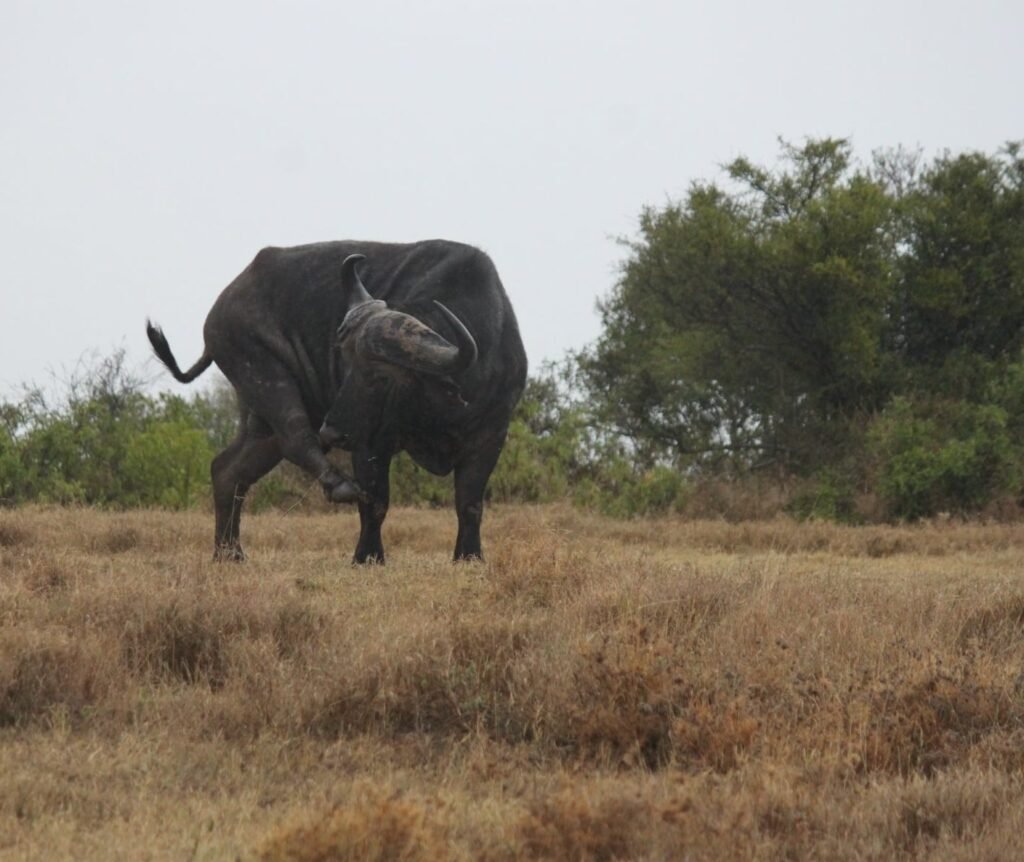
Hail the Cape Buffalo, part of the famous Big Five, carrying the deep, charcoal-grey of a threatening rain cloud, looking like a solid, immovable rock against the green of the marshes. The sheer power of the buffalo is such to scare away even lions.
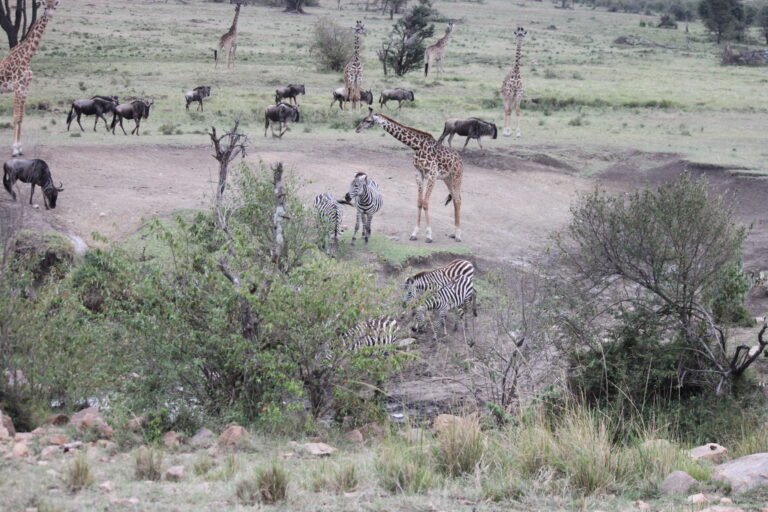
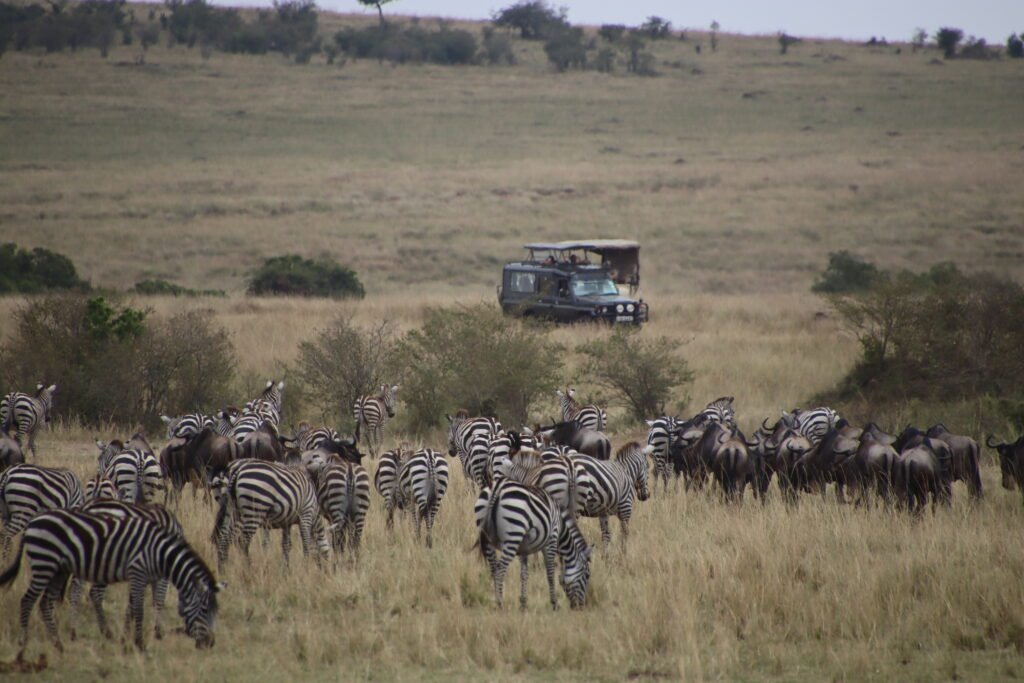
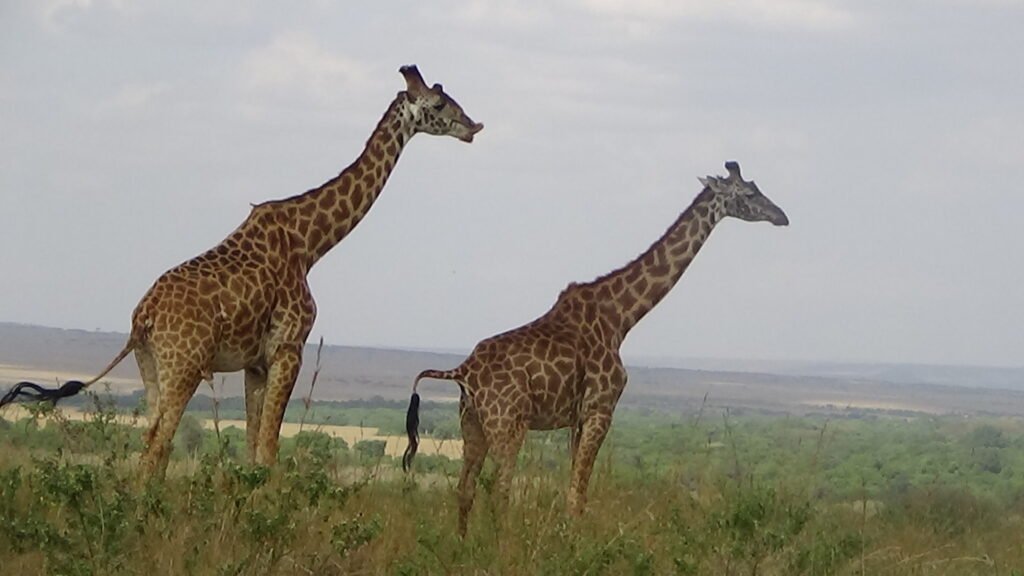
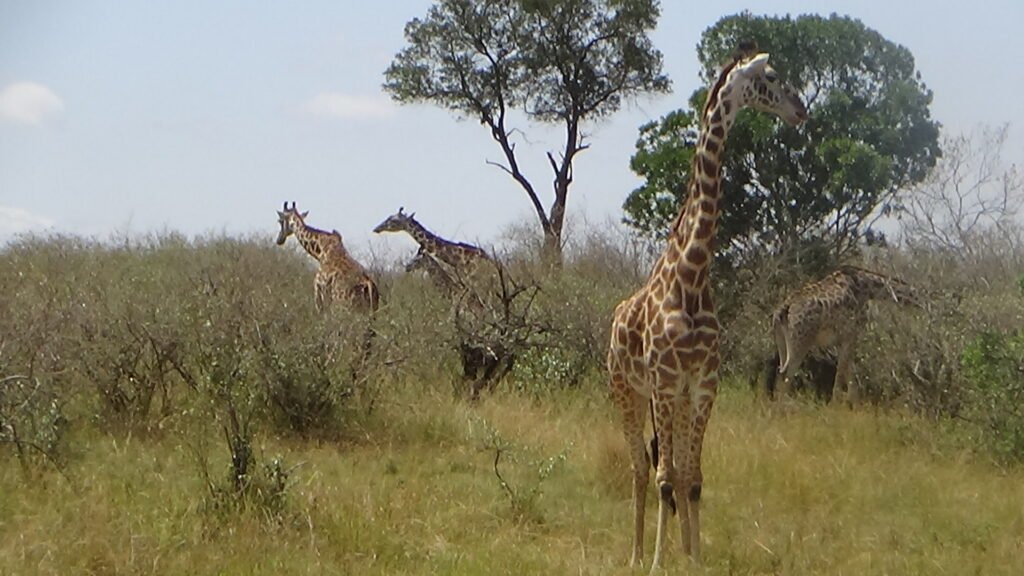
Contrast this with the ‘big prey’ that dot the plains. The Zebra, of course, is the most striking, with those jet-black and brilliant white stripes that seem to melt like a moving maze against the backdrop. It’s a bit of a riot for the senses when a large herd moves together; the stripes blur into a dizzying grey that confuses the eye and, quite fortunately for them, the lions too. Dear friends of the zebras are the wildebeest, sticking close, calm and coy even, with their black grey suit offering the perfect contrast against the stripes of the zebras. The Giraffes, by comparison, are like graceful moving mosaics. Their rich, chestnut patches—divided by lines the colour of cream—echo the jagged patterns of the dry earth beneath their hooves. They stand tall against the clear blue African sky and the golden Acacia, their long necks reaching into the emerald canopy, looking like nothing short of a painting.
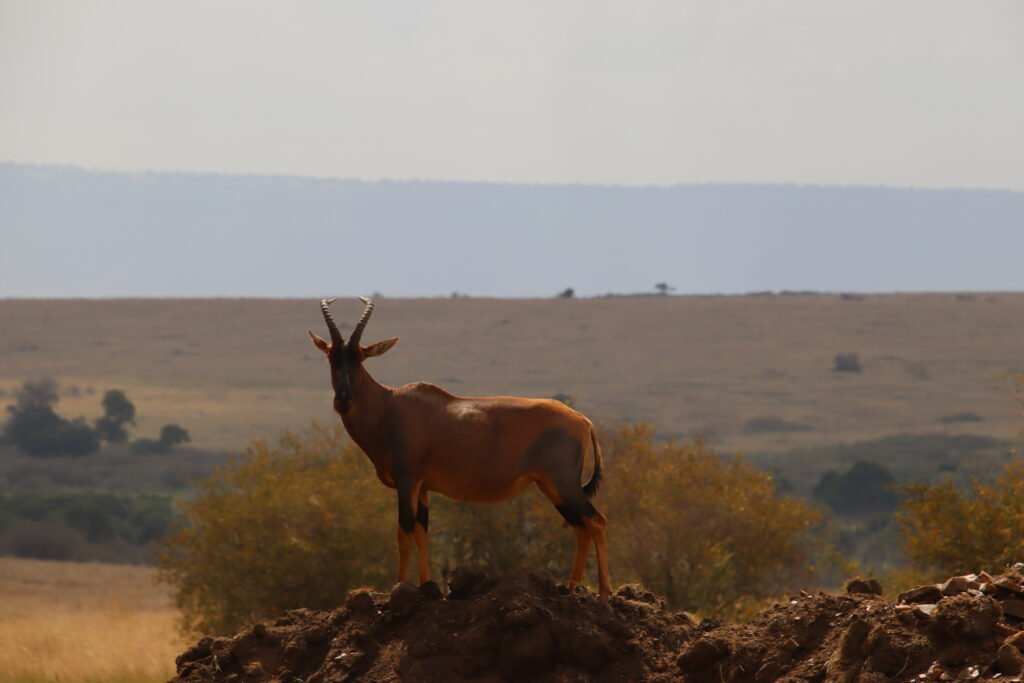
And then there are the smaller players who add their own sparks of colour. The Topi, with their coats that look like polished mahogany and those curious violet patches on their legs, or the Eland, whose tan hide carries the faintest white pinstripes. The prettiest of the pretty gazelles, with their immaculate coats, brown, black and white, and those angelic eyes all paint the picture of the perfect canvas. Even the grand nothingness of the plains is often brought to life by the flash of a lilac-breasted roller taking flight—a sudden, chaotic burst of turquoise and lilac that reminds you that the Mara hides its brightest treasures in plain sight.
It is a world of constant cohabitation under that vast, overarching blue. The animals, big and small, have found a way to either merge into the backdrop or stand out with a bold, defiant beauty. As the dust turns to that fine copper mist into the evening light, you realise that your own eyes are the best cameras you could ever hope for. No memory card could truly capture the beauty of the Mara.
As we pack up and prepare for the journey back, we carry these hues with us. The Mara isn’t just a place you visit; it’s a spectrum of colours that seeps into your heart. It’s the magic of the wild, a place where life and light are inextricably linked. We leave the ochre tracks and the emerald forests behind for now, but the mind is a Bedouin wanderer —always meandering back to that clear blue sky and the golden grass. Till next time, Masai Mara…you’ve been a grand masterpiece in the shifting spectre of life.