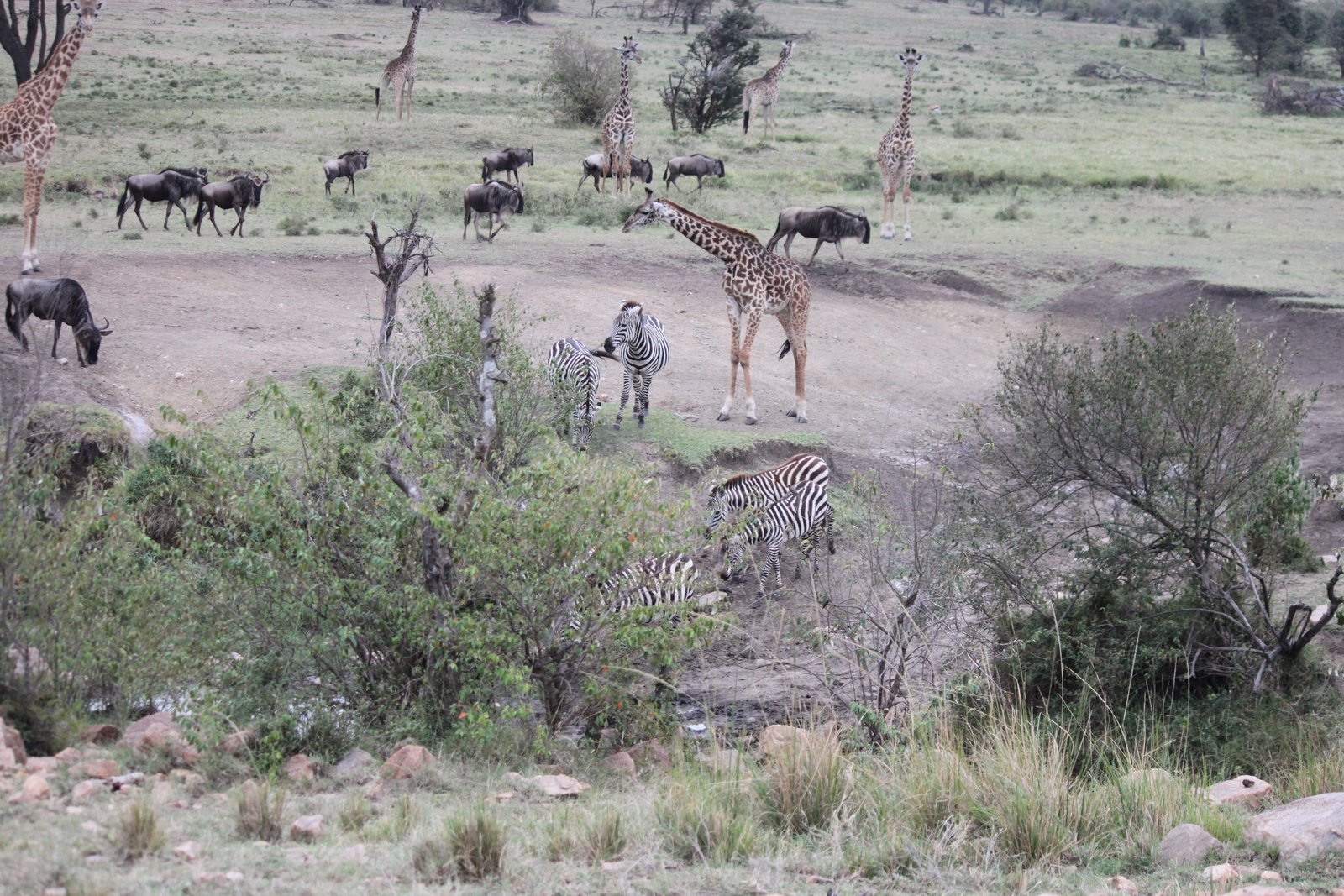
Giraffes, Wilderbeests and Zebras lick the saltwater. The brilliant colours of the Topi, as if wearing uniform of “blue jeans, yellow socks and black shoes” shine in the morning sun. When you stop to click, some giraffes and zebras stand as still as a statue, posing for the pictures. And the wildebeests give off this calm demeanour, staring at you with innocence.
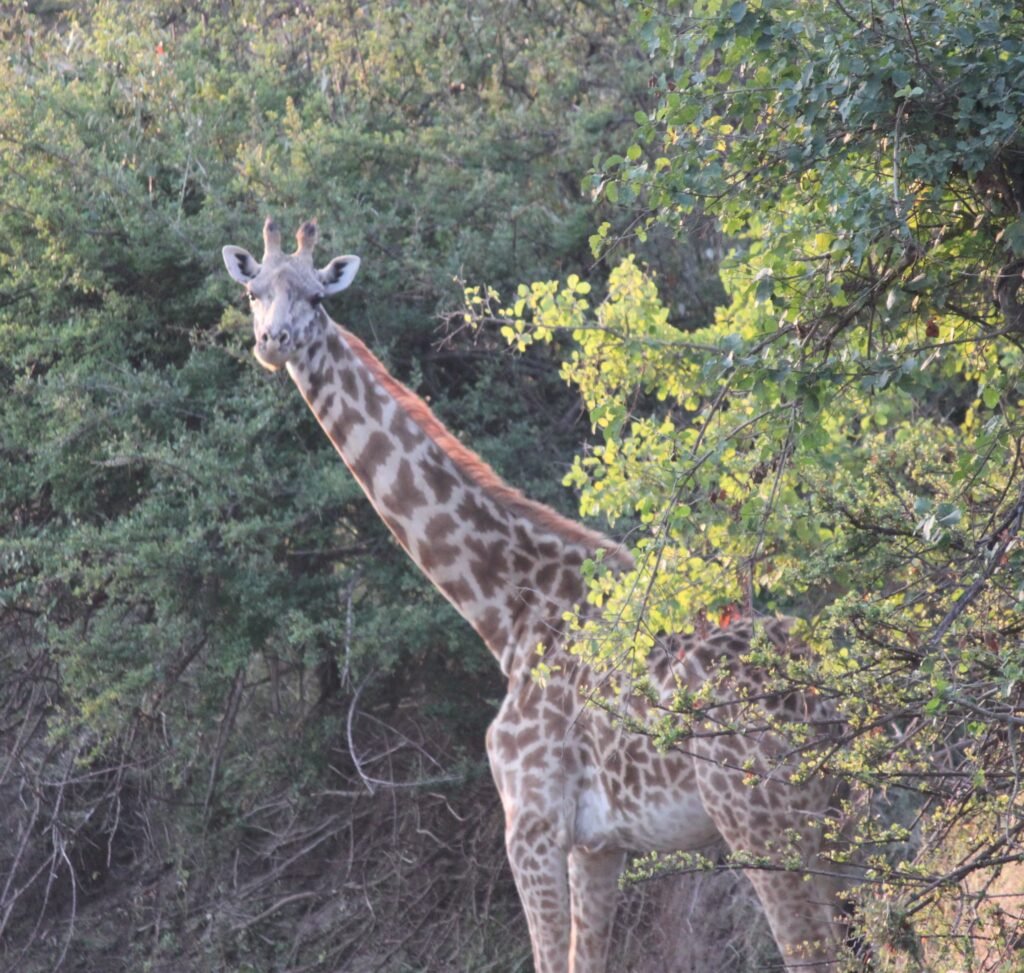
Later, we were educated that that these preys, by their instinct, consider us as predators and hence they gauge our every movement with caution. Our Masai guides told us why the Wilderbeests and Zebras are often seen grazing together. Their decision to stick together is a survival strategy based on complementary skills, where each species fills a specific niche and provides for the other’s weaknesses. Zebras have a strong sense of smell, while Wilderbeests have a strong sense of sight. Combined, they sense predators better. Zebras prefer tall grass, being bulk grazers, while wilderbeests are more selective, preferring short grass; hence no competition for food. Zebras have excellent long term memory, aiding in navigation during migration. Widerbeests are less skilled in navigation, thereby they follow the zebras.
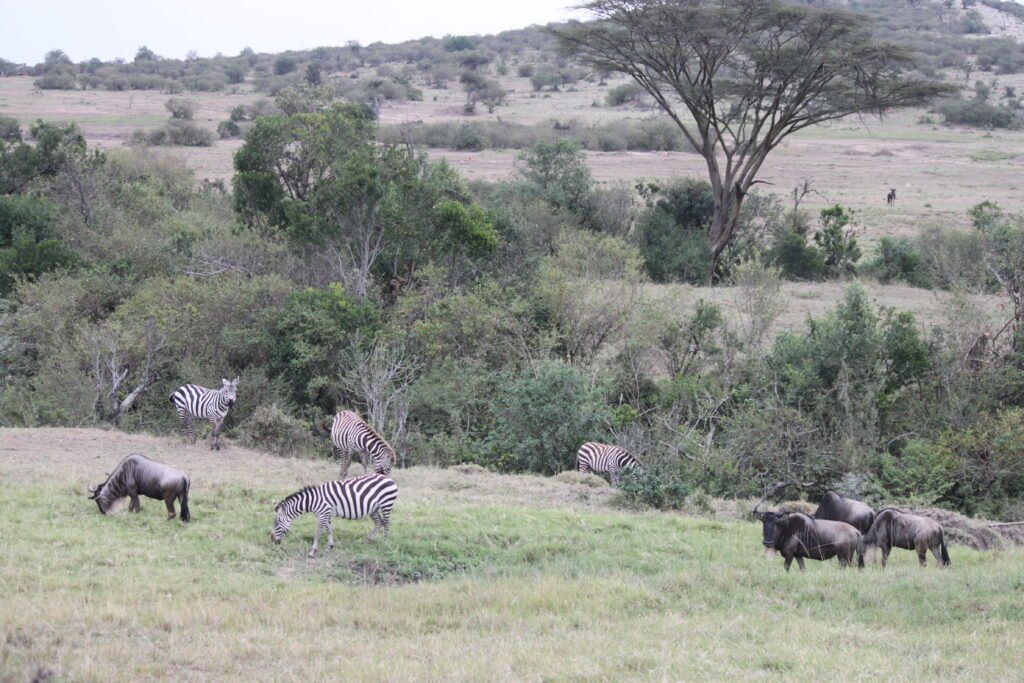
The camaraderie manifests in such beautiful spectres which you capture during your safari. The sight above is perhaps the most common one we have seen in Masai Mara. Stripes and greys against lust green, with the canopy of the African blue sky above. This is bliss.