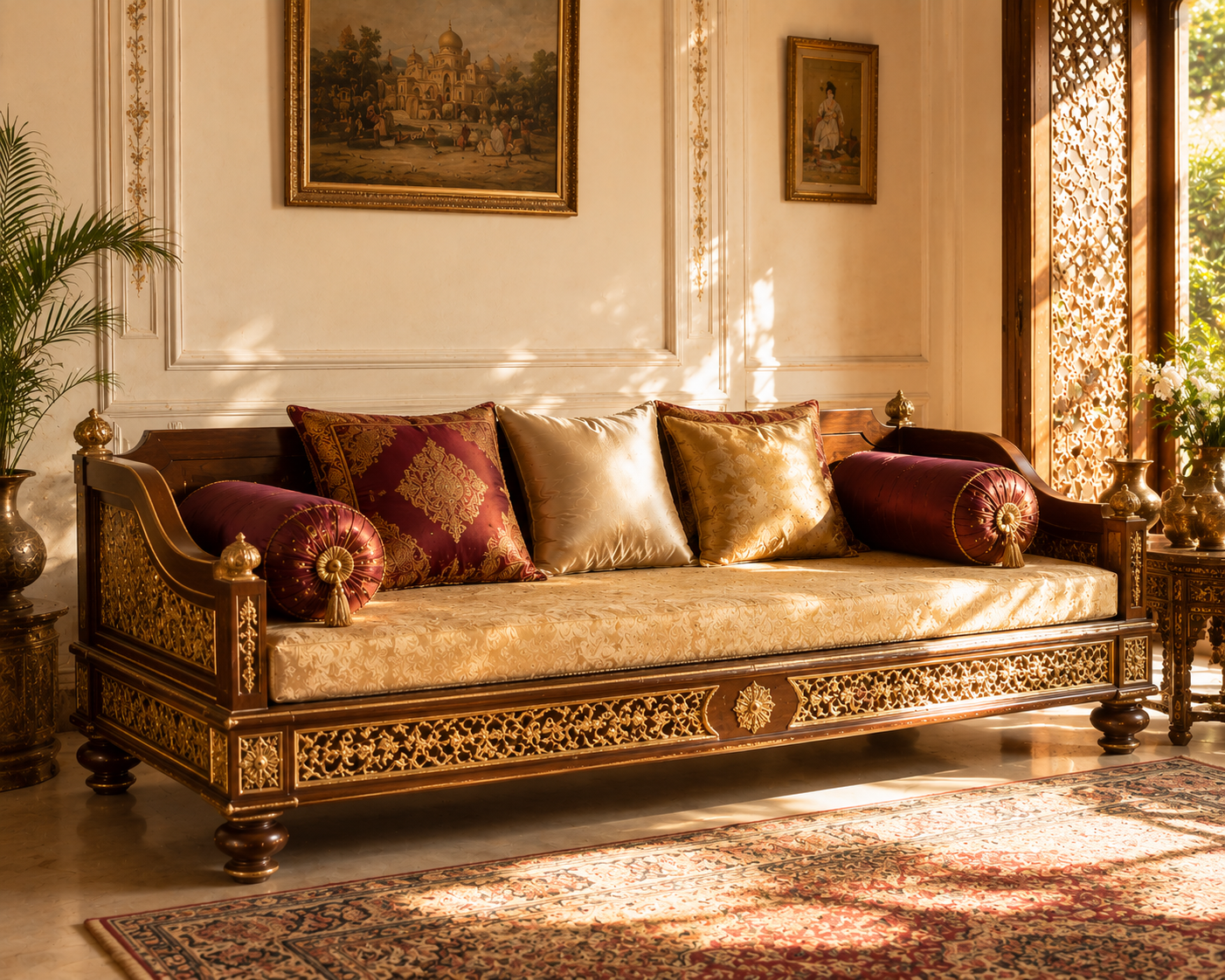
The afternoon light drew straight lines on the elegant takht in Chatterjee’s drawing room. This mahogany wood-carved, low bed like ornate furniture, had been in the Chatterjee family for four generations now. This takht, the regal ceremonial seat that Rajput courts had known for centuries, had been a gift to the Chatterjee’s.
When Pritam’s great great grandfather, in those days a doctor in British India, travelled to Jaipur to treat and eventually cure a princess of only five, he was rewarded this by the Maharani herself in her gratitude. The intricate woodwork, the impressive carvings spoke of an era of regal kings, mighty men, great battles. Mallika, Pritam’s wife, adorned this with cushions, elegantly wrapped in rich silk and embroidery. Over time, this takht became a signature of the Chatterjee’s drawing room.
It was fifteen minutes to 4pm on a lazy afternoon on the first Sunday of the month. Mallika knew her routine well. She went to the kitchen and put the kettle on the fire. Five cups of fine Darjeeling tea would soon brew, their mild aroma surpassing her airy kitchen and into the drawing room. Her timing was always impeccable, as was the punctuality of their guests. In quick succession, their doorbell rang and one by one, in walked Chatterjee’s old cronies from his university days. Men with wrinkles at the corner of their eyes, receding hairlines and substantial grey, walked in, with smiles befitting youth in their twenties.
They took their seats in Chatterjee’s drawing room like it was their own. The drawing room now left complete. Sunlight and chatter of this tight group of buddies rang in a merriment and blended with the golden sunlight bathing the room in colours of joy. They laughed just as loud and cracked jokes just as bad as they always did. Majumdar complained yet again about that time his paper was wrongly marked by Professor Sarkar and his father had the pleasure of beating him blue. Ghosh once again started a Kishor Kumar song in a totally wrong tune. Dutta laughed about that time he loved Chatterjee’s cousin Reema so much, only to know she was due to get married the very next month. Ray retold his adventures of running from home to watch movies with his cronies from the neighbourhood and the drama that unfolded each time he got caught in the act. None of this was new to Mallika. As she went about her chores around the house, she smiled to herself as she heard the same stories retold over a hundred times. She never tired of their camaraderie. Their meeting once a month, each month on the first Sunday afternoon, anchored them strongly to their past, one they were not letting go in a hurry. The mirror showed older men, yet the drawing room knew better; it held in a tight embrace the youth of these now-old men.
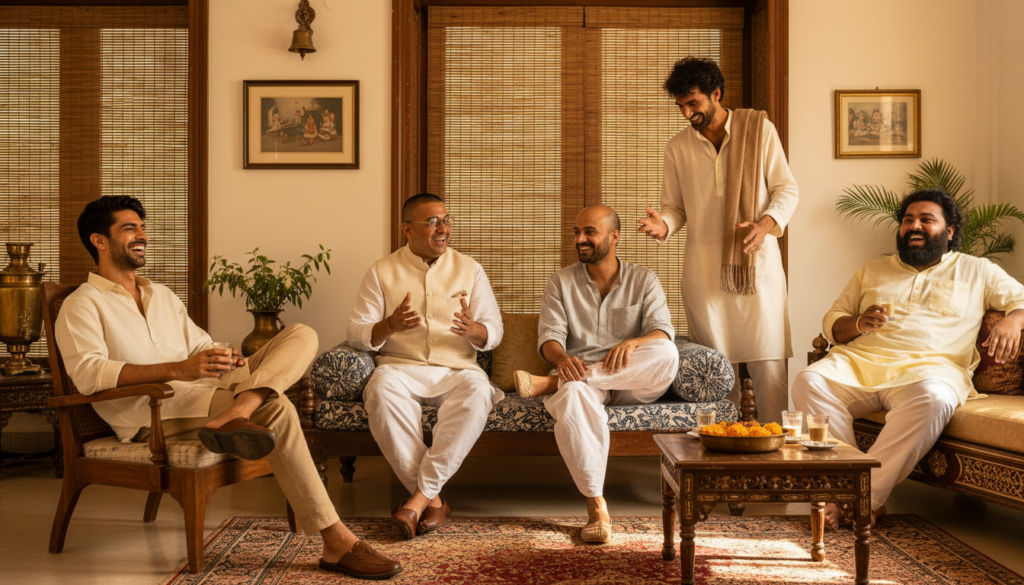
The sun became softer, but their soirée continued. From politics to cricket, global issues and neighbourhood strife, stories from 1920s to current day, nothing was left untouched. As the bunch of old joes munched on hot shingaras and sondesh, sipping Darjeeling tea, Chatterjee’s drawing room spun back to early 1920’s black and white days of youthful vigour, belief in revolution and eyes full of dreams.
Once in their prime, one evening, they had made a solemn promise; never to lose touch. Even while at the apex of their careers and family engagements, these five friends met each month. ‘Come rain hail or storm’ as they had promised each other several decades back, each remained true to their youthful vow.
They were as diverse in personalities as in life choices. Chatterjee and Dutta were extroverts, each attaining success in their careers, Ghosh rose from humble beginnings to achieve in his own business what few could from middle-class Bengali families. Majumdar was the bookworm from childhood and true to his nature, chose teaching as his profession. And Ray was the ever enigmatic person, the shy boy from college days, who spoke the least, yet enjoyed every moment with his close friends. He was an established and reputed author. They had lived their life of challenges and success. They had seen grief and known happiness. They had used their intellectual abilities to the fullest and were now content of a life well lived. And of a friendship nurtured to perfection. This was their true capital.
The aroma of Darjeeling tea, that scintillating fragrance of shingara and the mild scent of sandesh were a constant that Sunday afternoon.
This very same room has been witness to changing times, shifting political scenarios, paradigm shift in thoughts and actions of our society. Decades had thus passed, the only constant being the spirit of friendship and a love that was timeless.
Through the banter of five youths of college days till age caught up in due course of time, Chatterjee’s drawing room had always been alive with heated chats during Naxal times, debates during cricket matches, to political strives across the nation. Songs and theatre, poetry and prose hung in the air while the five friends lived and loved and grew stronger together with shifting times.
This day, as their loud chatter went on, the sun set over the horizon. The drawing room turned a golden hue as the last rays of the sun cast each of the five men in a cask of gold. Like five gold coffins around five men, encasing them in timelessness.
————–*************—————*************—————**************——————–
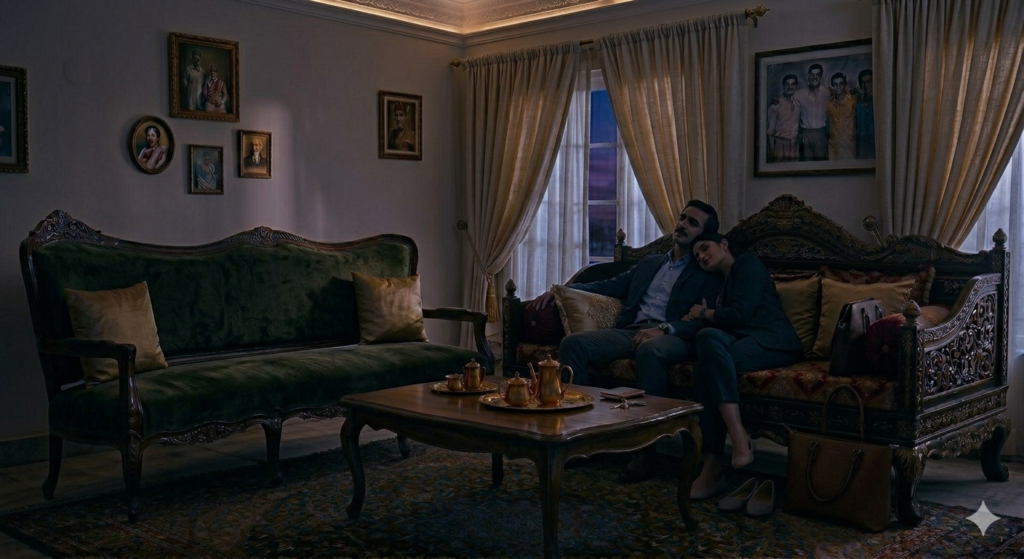
As the sun was about to set and the clock on the mantelpiece showed 6.40pm, the key turned in the lock of the main wooden door. In walked Ritam and his wife, Pallavi, both tired after beating the horrible evening traffic on way back from office. A cup of Darjeeling tea was mandatory after coming home. While Ritam went to boil the water and rinse in warm water their fine bone china tea pot, Pallavi took out the cups and saucer with the tray. Once the tea leaves were soaking in their aroma in the hot water inside the tea pot, Ritam and Pallavi sat on the takht side by side, a family heirloom now of six generations, its mahogany sides bearing testimony to decades of arms rested there, while stories were brewed, songs were sung and dreams were born.
This was Ritam’s treasured inheritance. He remembered his grandfather Pritam Chatterjee, who used to regale Ritam in tales of how the beautiful Maharani of Rajasthan had gifted his great grandfather this takht as a token of gratitude. The picture of his grandfather Pritam and his four buddies, all in their university days, still framed the wall above this heirloom. Five youths, with eyes full of dreams and revolution in their hearts. To Ritam, this picture was the greater inheritance, a token of love and bond that stood the test of time. Their bond was forever. And this drawing room had seen it all, forgotten nothing.
Ritam looked at the five faces in the photograph — young, unguarded, fearless — and felt, not for the first time, that this very same drawing room still remembered them. That it held their voices somewhere in its walls, their laughter gently wrapped in the intricate woodwork of the takht, in the very air that smelled, even now, faintly of shingara and Darjeeling tea. As though the first Sunday of every month had left something of itself behind, layered quietly into the room like old paint.
The golden hue of the setting sun cast their drawing room with a pale shine, like the last hurried streaks of gold the sky threw around before turning into an ink blue. They hadn’t switched on the lights yet. The warm evening was welcoming. Pallavi leaned her head lightly on Ritam’s shoulder. Neither spoke. The silence echoed so much. A silence that seemed full and shared by more in the room. With the smell of shingara still lingering in the air mixed with the fragrant smell of Darjeeling tea, Ritam reached out and held Pallavi’s hand. They sat silently on the takht as the world around them grew to a pitch black.